

Statistical analysis has become central to profitable football betting. The explosion of available data enables sophisticated analysis previously impossible for individual bettors. Free resources now provide access to expected goals data, historical results, team performance metrics, and analytical tools that inform betting decisions. This guide reviews the most useful free statistical resources for football bettors, explaining what each offers and how to use them effectively for Championship and broader football betting research.
Understanding What Data You Need
Different betting approaches require different data types. Under goals bettors need defensive statistics, clean sheet rates, and xG against metrics. Match result bettors need form analysis, head-to-head records, and relative team strength measures. Goalscorer bettors need individual player statistics including shots, expected goals, and minutes played.
Raw data requires interpretation. Goals scored and conceded provide starting points, but xG metrics reveal whether those numbers are sustainable. A team that’s scored ten goals from six xG is due regression; one with ten goals from twelve xG might improve. Understanding which statistics predict future performance separates useful analysis from noise.
Historical depth matters for pattern identification. Single-season data provides current form; multi-season data reveals structural team characteristics. Championship teams often show consistent patterns across seasons that persist despite roster changes and managerial transitions.
Timeliness affects betting relevance. Statistics updated after each matchday enable rapid analysis; delayed updates limit usefulness for time-sensitive betting decisions. Check update frequency when evaluating data sources.
Expected Goals Resources
Understat provides free xG data for top European leagues including the Championship. Each match displays xG for both teams, expected assists, and shot maps showing the location and quality of chances created. Individual player xG statistics enable goalscorer market analysis.
The platform calculates xG using a proprietary model trained on historical shot data. While model details aren’t fully public, outputs align reasonably with other xG providers. Season-long xG tables reveal which teams are over or underperforming relative to chance quality.
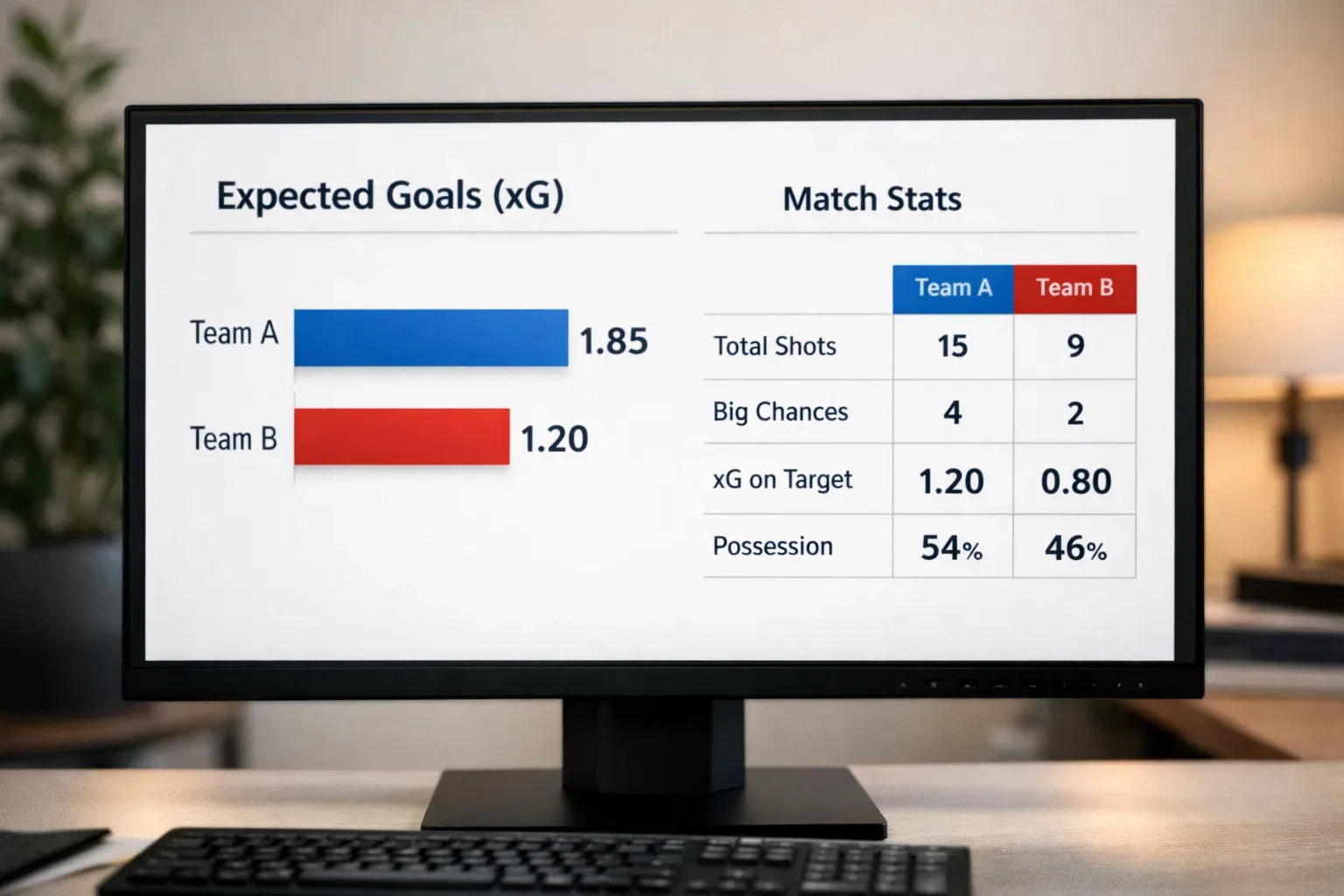
FBref, powered by StatsBomb data, offers comprehensive statistics including xG for Championship matches. The interface provides team and player level statistics with sorting and filtering capabilities. Detailed match reports show shot locations, passing networks, and defensive actions.
StatsBomb’s underlying data represents among the highest quality available, making FBref particularly valuable for serious analysis. The site also provides data export options for those who want to work with statistics in spreadsheets or programming environments.
Infogol presents xG analysis specifically designed for betting applications. The platform displays xG performance tables, attack and defence ratings, and match previews incorporating expected goals analysis. Betting-focused framing makes Infogol particularly accessible for punters.
Historical Data Sources
Football-Data.co.uk maintains historical results and odds data spanning decades for numerous leagues including the Championship. Downloadable CSV files contain match results, half-time scores, shots, corners, and bookmaker odds from multiple operators.
This resource proves invaluable for backtesting betting systems. Testing whether a strategy would have profited historically requires historical odds data; Football-Data provides this in readily usable format. Championship data extends back many seasons, enabling robust historical analysis.
Transfermarkt provides transfer history, squad valuations, and player movement data. Understanding relative squad investment helps assess team quality beyond on-pitch statistics. The platform also tracks injuries, suspensions, and managerial changes affecting team selection.
WorldFootball.net offers comprehensive historical results including lower leagues often absent from other sources. Head-to-head records, historical tables, and competition archives support research into long-term patterns and fixture history.
Team and Player Analysis Platforms
WhoScored provides match ratings, player statistics, and tactical analysis for Championship matches. Their rating system quantifies individual contributions; team statistics include passing accuracy, aerial success, and defensive metrics.
The platform’s strength lies in granular player statistics useful for prop betting. Shots per game, tackles per game, and other counting statistics inform markets beyond match results. Weakness indicators and strength profiles offer quick team assessment.
SofaScore delivers live match statistics and comprehensive historical data. The mobile-friendly interface suits quick reference during matches. Player ratings, heat maps, and momentum indicators support both pre-match research and in-play decision-making.
Fotmob combines statistics with detailed match coverage including formations, line-ups, and tactical notes. The platform covers Championship comprehensively with match-by-match statistics readily accessible. Push notifications keep users informed of team news and match events.
Analytical and Modelling Resources
FiveThirtyEight publishes club soccer predictions based on their Soccer Power Index model. While coverage focuses on top leagues, the methodology explanations inform independent model development. Understanding how sophisticated models approach prediction improves your own analytical thinking.
Opta’s public analysis, available through various media partners, demonstrates professional statistical approaches. While raw Opta data requires expensive subscriptions, published analysis articles reveal which metrics professionals prioritise and how they interpret them.
Football Reference provides advanced statistics derived from play-by-play data. Shooting, passing, and defensive metrics go beyond basic counts to quality-adjusted measures. The platform serves as gateway to understanding modern football analytics.
Building Your Research Workflow
Combine multiple sources rather than relying on any single platform. Cross-referencing xG data from Understat with historical patterns from Football-Data and current form from WhoScored produces more robust analysis than any source alone.
Establish consistent pre-match research routines. Perhaps you check xG tables, then review head-to-head records, then assess recent form through multiple sources. Systematic approaches ensure you don’t miss relevant information while avoiding analysis paralysis.

Save key statistics in personal spreadsheets for easy reference. Tracking which statistics you find useful and maintaining historical records supports pattern recognition and system development. Personal databases grow more valuable over time as data accumulates.
Set up alerts or bookmarks for efficient access. Checking multiple websites takes time; streamlined access through browser organisation or RSS feeds reduces friction and encourages thorough research.
Learn a strong bet builder strategy.
Championship-Specific Considerations
Championship data coverage is comprehensive but less extensive than Premier League equivalents. All major platforms cover the division, though some advanced metrics may be unavailable or less reliable due to smaller sample sizes.
Historical Championship data enables analysis of promotion and relegation patterns. Football-Data archives include seasons of Championship results useful for identifying systematic patterns in promoted teams’ performance, relegation battles, and seasonal goal-scoring trends.
Player movement between Championship and Premier League creates data continuity challenges. Statistics from Premier League seasons may not translate directly to Championship performance. Contextualise player data by league when assessing expected contributions.
The 46-match Championship season provides substantial sample size by around December. Early-season statistics require caution; mid-season onwards, patterns become statistically meaningful. Adjust confidence in statistical conclusions based on matches played.
Advanced Resource Usage
Data export capabilities enable custom analysis beyond platform defaults. Downloading Football-Data files into Excel or programming environments enables personalised model construction, backtesting, and analysis tailored to your specific betting interests.
Combining statistics with qualitative information produces superior analysis. Numbers reveal what happened; watching matches and reading tactical analysis explains why. The best betting research integrates statistical patterns with contextual understanding.
Tracking your analytical process identifies which statistics actually improve your predictions. Not every available metric is useful for betting; empirical assessment of which data correlates with your successful selections focuses research on productive analysis.
Free resources provide foundation for serious betting research. Those willing to invest time in learning these platforms and developing systematic research approaches gain analytical capabilities that improve betting outcomes. The resources exist; discipline and consistency in using them determines whether they translate to better results.
Eliminate nasty bankroll variance using burnley bet.