

Bet builders have become one of the most popular betting products, allowing punters to combine multiple selections from the same match into single wagers with enhanced odds. Every major bookmaker now offers some version of this feature, promoting it heavily through advertising and social media. The appeal is obvious: combining selections that seem likely produces impressive-looking odds. The reality is more complex. This guide examines how bet builders work, when they offer genuine value, common traps to avoid, and strategies for constructing profitable same-game multiples.
How Bet Builders Work
Bet builders combine independent selections from a single match into one bet that requires all legs to win. If you combine home win, over 2.5 goals, and a player to score, all three must happen for your bet to win. The odds multiply together, creating higher potential returns than individual bets.
Bookmakers price bet builder selections using models that account for correlation between legs. If you combine home win with the home team’s striker scoring, these outcomes aren’t independent; the latter makes the former more likely. Bookmakers adjust odds to reflect this correlation, reducing combined prices below simple multiplication.
The margin bookmakers charge on bet builders typically exceeds single-bet margins. You pay premium pricing for the convenience of combining selections. This embedded margin means bet builders need even larger edge to overcome the additional cost.
Different bookmakers calculate bet builder odds differently. Some are more generous with correlation adjustments than others. Shopping for best bet builder prices across multiple bookmakers can significantly improve returns, just as with single-bet odds comparison.
The Correlation Problem
The most common bet builder mistake involves combining positively correlated selections without understanding how this reduces value. Positively correlated selections become more likely together than separately; bookmakers recognise this and reduce combined odds accordingly.
Consider combining over 2.5 goals with both teams to score. These selections are highly positively correlated: matches with three or more goals usually involve both teams scoring. The combined odds will be substantially lower than simply multiplying individual odds because bookmakers correctly identify that hitting one leg makes hitting the other more likely.
Negatively correlated selections present opposite problems. Combining under 2.5 goals with a player to score two or more goals seems to offer high odds because both selections individually have moderate probability. However, these selections work against each other: low-scoring matches rarely feature hat-tricks. The combined probability is much lower than it appears.
Neutral or weakly correlated selections offer the best bet builder opportunities. Combining outcomes that don’t substantially affect each other’s probability preserves more of the nominal odds multiplication. Finding such combinations requires understanding how different match events relate.
Constructing Sensible Bet Builders

Start with a primary thesis about the match. Perhaps you expect a tight, low-scoring home win. Build your bet builder around selections that align with this thesis: home win, under 2.5 goals, perhaps a specific player who scores from set pieces getting on the scoresheet.
The number of legs dramatically affects probability. Each additional leg multiplicatively reduces win probability. A three-leg bet builder might have 8-12% probability; a six-leg version might have 1-2% probability. More legs means more impressive odds but dramatically lower hit rate.
Consider which legs add genuine value versus which merely add complexity. Each leg must individually offer value and collectively make sense. Adding legs because they look likely without considering correlation and value destroys profitability.
Player prop legs deserve particular scrutiny. Anytime goalscorer selections for strikers seem obvious but are often poorly priced. Bookmakers know that bettors love backing recognisable strikers and price accordingly. Lesser-known players who score from midfield or defence sometimes offer better value.
Market-Specific Bet Builder Considerations
Match result legs provide the foundation for most bet builders. Your view on who wins (or draws) shapes which other selections make sense. A home win thesis supports different complementary legs than a draw thesis.
Goals market legs (over/under, BTTS) must align with your match result view. If you’re backing a dominant home win, over 2.5 goals might make sense if the home team attacks well. If you’re backing a tight home win, under 2.5 might be more appropriate.
Cards and corners legs add variance without always adding value. These markets are often inefficiently priced in isolation, but combining them in bet builders doesn’t automatically capture that inefficiency. Bookmakers may price bet builder versions less generously than single-bet equivalents.
Goalscorer legs work best when you have genuine insight into who might score. Simply selecting the main striker isn’t analytical edge; everyone knows they’re most likely to score. Value comes from identifying less obvious goalscorers or matches where defensive players might contribute.
When Bet Builders Offer Value
Bet builders potentially offer value when you identify outcomes that bookmakers have priced as less correlated than they actually are. If two selections typically occur together but bookmakers haven’t fully captured this correlation, the combined odds might exceed fair value.
Specific tactical situations sometimes create bet builder value. A team that presses high and creates chances through turnovers might produce combinations of over 2.5 goals, specific pressing midfielders scoring, and high card counts. If you understand these tactical patterns better than bookmaker models, value exists.
Weather and pitch conditions occasionally create correlated outcomes that models miss. Heavy rain might simultaneously favour unders, cards, and direct playing styles. Building combinations around such conditions sometimes captures value that individual markets don’t.
Injury or team news can create bet builder opportunities. If a key defender is missing, combinations involving opponent goals become more likely in ways that bet builder pricing might not fully reflect until individual markets adjust.
Common Bet Builder Traps
The “obvious combination” trap involves combining selections that everyone would combine. Home win plus home striker to score plus over 1.5 goals looks logical, which means bookmakers price it accurately. Value rarely exists in combinations that any casual observer would construct.
The “longshot accumulation” trap involves adding low-probability legs because their high individual odds boost combined prices impressively. These bet builders almost never hit because multiplying low probabilities produces vanishingly small combined probability. A 10% × 15% × 20% bet builder has only 0.3% probability regardless of how impressive the odds look.
The “correlation ignorance” trap involves not understanding how selections relate. Bettors who combine positively correlated selections expecting multiplicative odds receive disappointing prices. Those who combine negatively correlated selections face near-impossibility without realising it.
The “social media influence” trap involves copying bet builders promoted by tipsters or gambling accounts. These promotions exist to generate bookmaker revenue, not bettor profits. The promoted combinations are typically entertainment products, not analytical value propositions.
Use the famous kelly criterion wisely.
Risk Management for Bet Builders
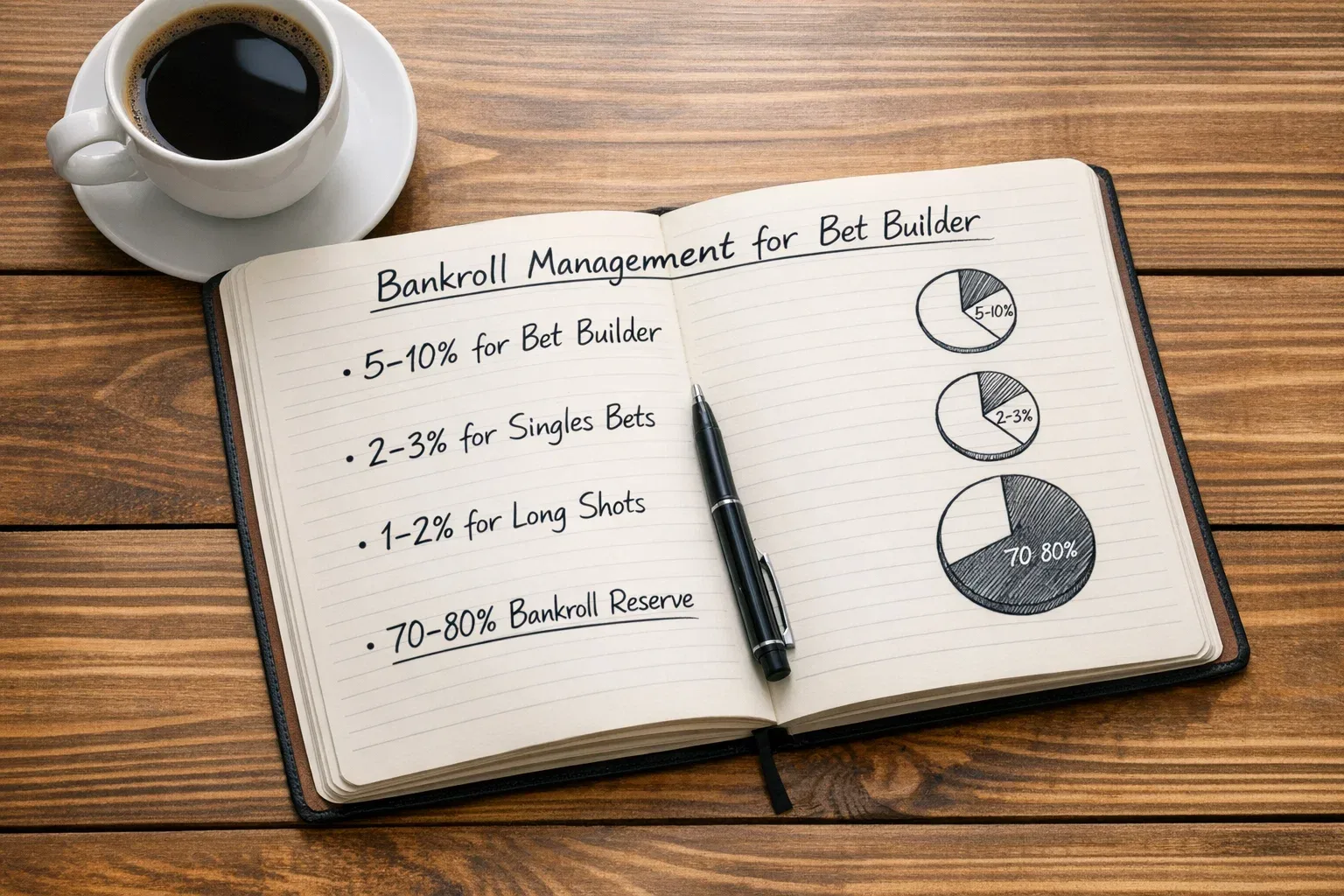
Treat bet builders as high-variance entertainment rather than core betting strategy. Allocate a small percentage of your betting bankroll to bet builders, perhaps 5-10%, while focusing the majority on more predictable markets.
Stake conservatively on individual bet builders. The high variance means most will lose; sizing positions appropriately prevents bet builder losses from devastating overall results.
Track bet builder results separately from single-bet performance. Your edge profile might differ substantially between these betting types. Empirical evidence should guide how much bet builder exposure you maintain.
Avoid the temptation to increase bet builder stakes after losing streaks. The “due for a win” mentality ignores probability realities. If anything, losing streaks might indicate that your bet builder construction lacks edge, suggesting reduced rather than increased stakes.
Alternative Approaches
Small leg bet builders (two or three selections) offer better probability than large combinations while still capturing the appeal of enhanced odds. These produce more winners while maintaining some multiplicative effect.
Same-game parlays with cash-out options enable position adjustment as matches progress. Taking partial profit on a bet builder in good position reduces variance while capturing some return.
Building separate single bets rather than combined bet builders avoids margin stacking. If you like three selections in a match, three singles at fair odds might outperform a three-leg bet builder with embedded margin penalties.
Compare bet builder odds against manual calculation of combined fair odds. If your assessment of individual selection probabilities multiplied together produces higher probability than bet builder odds imply, value potentially exists. If not, the bet builder likely represents poor value regardless of how appealing it looks.
Bet builders offer entertaining betting experiences with dramatic potential returns. Those who approach them with disciplined construction, correlation awareness, and realistic expectations can find them a worthwhile part of betting activity. Those who construct them casually based on “obvious” combinations will consistently overpay for entertainment value that rarely translates to profit.
Seek your true profit potential alongside burnley bet.