
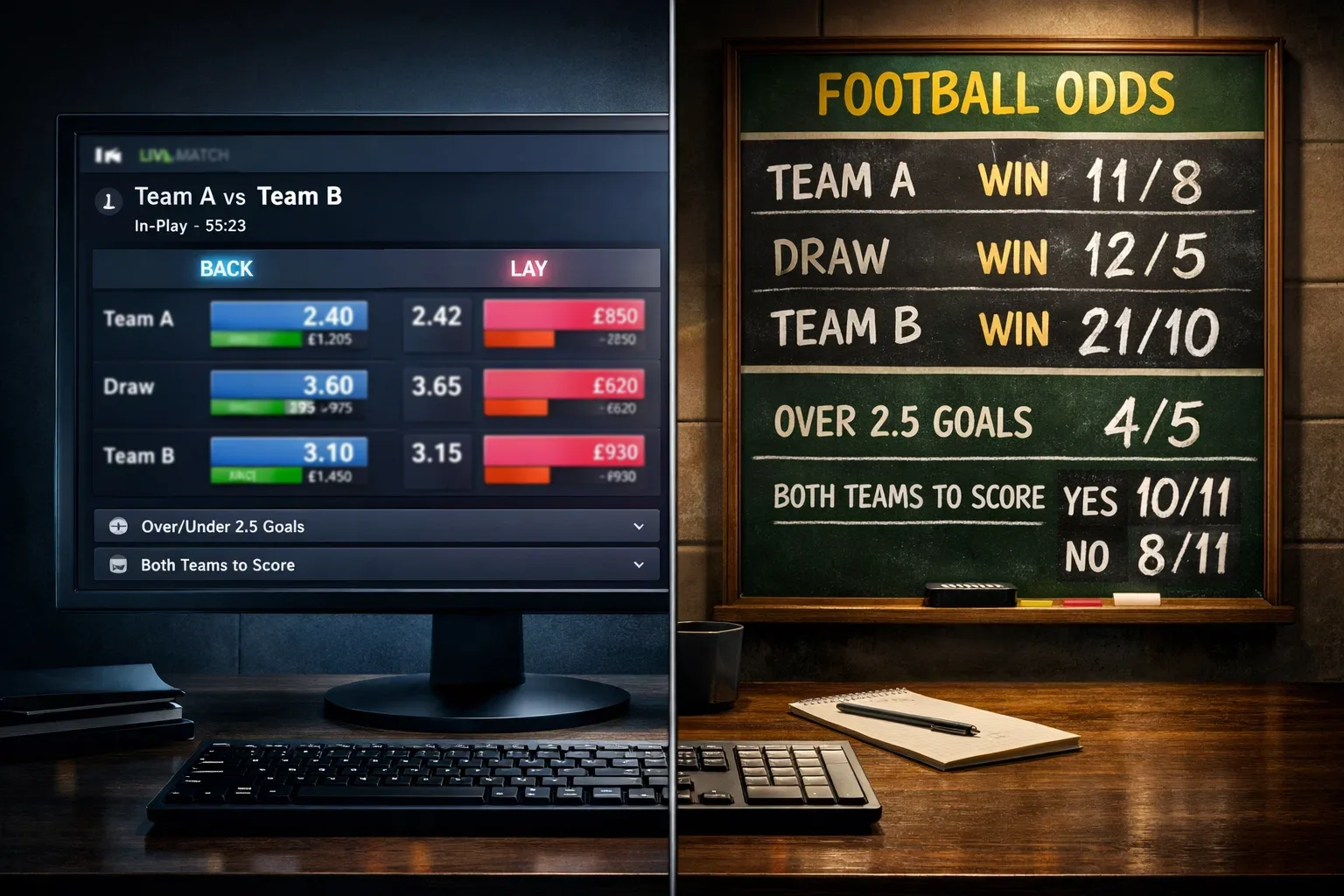
The betting landscape offers two fundamentally different platforms: traditional bookmakers and betting exchanges. Each serves the same basic function, enabling bets on football outcomes, but their mechanisms, pricing structures, and strategic implications differ substantially. Understanding these differences enables bettors to choose the platform best suited to their approach and, ideally, use both strategically. This guide compares exchanges and bookmakers across key dimensions relevant to football betting.
How Each Platform Works
Traditional bookmakers set odds and accept bets against themselves. When you bet with a bookmaker, the bookmaker is your counterparty. They profit when you lose; they lose when you win. This adversarial relationship shapes how bookmakers treat winning customers.
Betting exchanges facilitate peer-to-peer betting. The exchange provides a platform where users offer and accept bets against each other. The exchange itself takes no position on outcomes; it profits from commission charged on winning bets regardless of which user wins.
Bookmakers determine odds based on probability assessment plus profit margin. Exchange odds emerge from user supply and demand, with prices settling where backers and layers find agreeable terms. This market mechanism typically produces more accurate odds than bookmaker estimation.
The exchange model enables both backing (betting for an outcome) and laying (betting against an outcome). Laying represents the bookmaker role: you accept bets from others and win if the selection loses. This flexibility creates opportunities absent from bookmaker-only betting.
Odds Comparison
Exchange odds are typically superior to bookmaker odds because they lack embedded bookmaker margins. Where a bookmaker might offer 1.90 on both sides of a coin flip (implying 105% total book), an exchange might show 1.98/2.02 (implying 99% with commission considered).
The exchange advantage is largest on liquid markets. Major football matches attract substantial exchange volume, producing tight spreads and competitive odds. Obscure markets might have wide spreads or insufficient liquidity, reducing the exchange advantage.
Bookmakers occasionally offer superior odds on specific selections, particularly when they want to attract betting action to balance their books. Promotional odds, price boosts, and enhanced offers can exceed exchange equivalents. Odds comparison should include both exchange and bookmaker options.
Commission structures vary between exchanges and affect true odds comparison. Betfair charges 5% base commission on net winnings (reduced for high-volume users); Smarkets charges 2%. A 2.00 exchange price at 5% commission yields effective odds of 1.95; the same price at 2% commission yields 1.96.
Liquidity and Availability
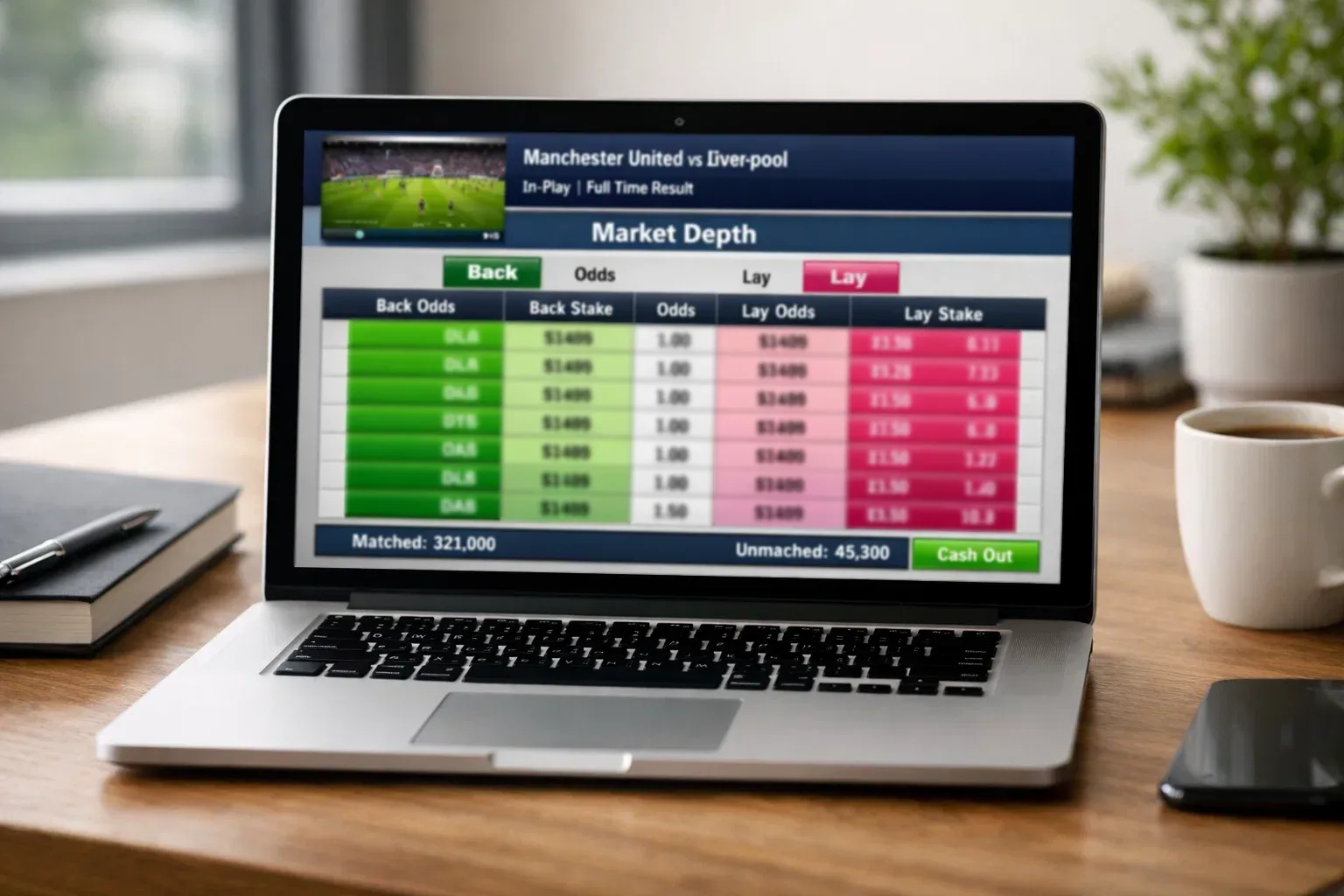
Bookmakers offer guaranteed liquidity: whatever stake you want within their limits, they’ll accept. This certainty enables confident bet placement without worrying whether matched funds exist.
Exchanges have variable liquidity depending on market popularity. Premier League matches attract millions in matched bets; lower-league football might have minimal exchange activity. Championship matches fall somewhere between, with decent liquidity on main markets but limited liquidity on derivatives.
Pre-match liquidity typically exceeds in-play liquidity on exchanges. The predictability of pre-match betting attracts more participants than the speed-dependent in-play environment. Those relying on exchange in-play must consider whether sufficient liquidity exists at their desired price points.
Partial matching occurs when exchange liquidity at your requested price doesn’t cover your full stake. You might request £100 at 2.10 and receive £60 matched at 2.10 and £40 unmatched waiting for better prices or additional counterparties.
Account Treatment
Bookmakers restrict or close accounts of winning bettors. If you consistently profit from a bookmaker, expect reduced stakes limits, excluded promotions, or complete account closure. This adversarial dynamic penalises betting skill.
Exchanges welcome winning bettors because the exchange profits regardless of who wins individual bets. Skilled bettors improve exchange liquidity and attract others seeking better odds. The exchange model has no reason to restrict successful participants.
This treatment difference has strategic implications. Bookmakers suit approaches that don’t trigger restrictions: recreational-style betting patterns, avoiding sharp markets, and limiting winning consistency. Exchanges suit approaches that prioritise long-term profitability without restriction concerns.
Account longevity affects strategy viability. A value betting approach that produces consistent winners might be profitable but unsustainable at bookmakers due to restrictions. The same approach remains sustainable indefinitely on exchanges where winning creates no adverse consequences.
Strategic Flexibility
Exchanges enable trading strategies impossible with bookmakers. Backing before a match and laying in-play (or vice versa) locks in profit or limits loss regardless of outcome. This trading mirrors financial market approaches and creates opportunities beyond simple bet-and-wait strategies.
Laying enables profiting from selections you believe are overvalued. If a team’s odds seem too short, you can lay them rather than backing their opponent. This precision targeting of perceived mispricing isn’t possible with bookmaker-only betting.
Arbitrage between exchanges and bookmakers exploits price discrepancies for guaranteed profit. When bookmaker odds exceed exchange lay odds (accounting for commission), risk-free profit exists. These opportunities are rare and fleeting but demonstrate the value of accessing both platforms.
Hedging positions is easier on exchanges than with bookmakers. If you backed a team pre-match and want to lock in profit as their position improves, exchange laying enables precise hedging at market prices. Bookmaker cash-out offers typically provide worse terms than exchange hedging.
Platform-Specific Considerations
Betfair dominates UK exchange volume, offering deepest liquidity across football markets. Their commission structure starts at 5% but decreases with volume. Betfair also offers bookmaker-style “sportsbook” products alongside their exchange.
Smarkets offers 2% commission, substantially undercutting Betfair. Their liquidity is lower but often sufficient for recreational betting volumes. For bettors prioritising low commission over maximum liquidity, Smarkets deserves consideration.
Matchbook targets professional bettors with low commission and sophisticated interface but has even lower liquidity than alternatives. Betdaq offers Ladbrokes-backed exchange with occasionally competitive liquidity but generally trails market leaders.
Traditional bookmakers vary enormously in odds quality, market depth, and account treatment. Some restrict quickly; others tolerate winners longer. Some offer excellent odds on specific markets; others provide broad coverage with mediocre prices. Building relationships with multiple bookmakers enables strategy flexibility.
Practical Recommendations
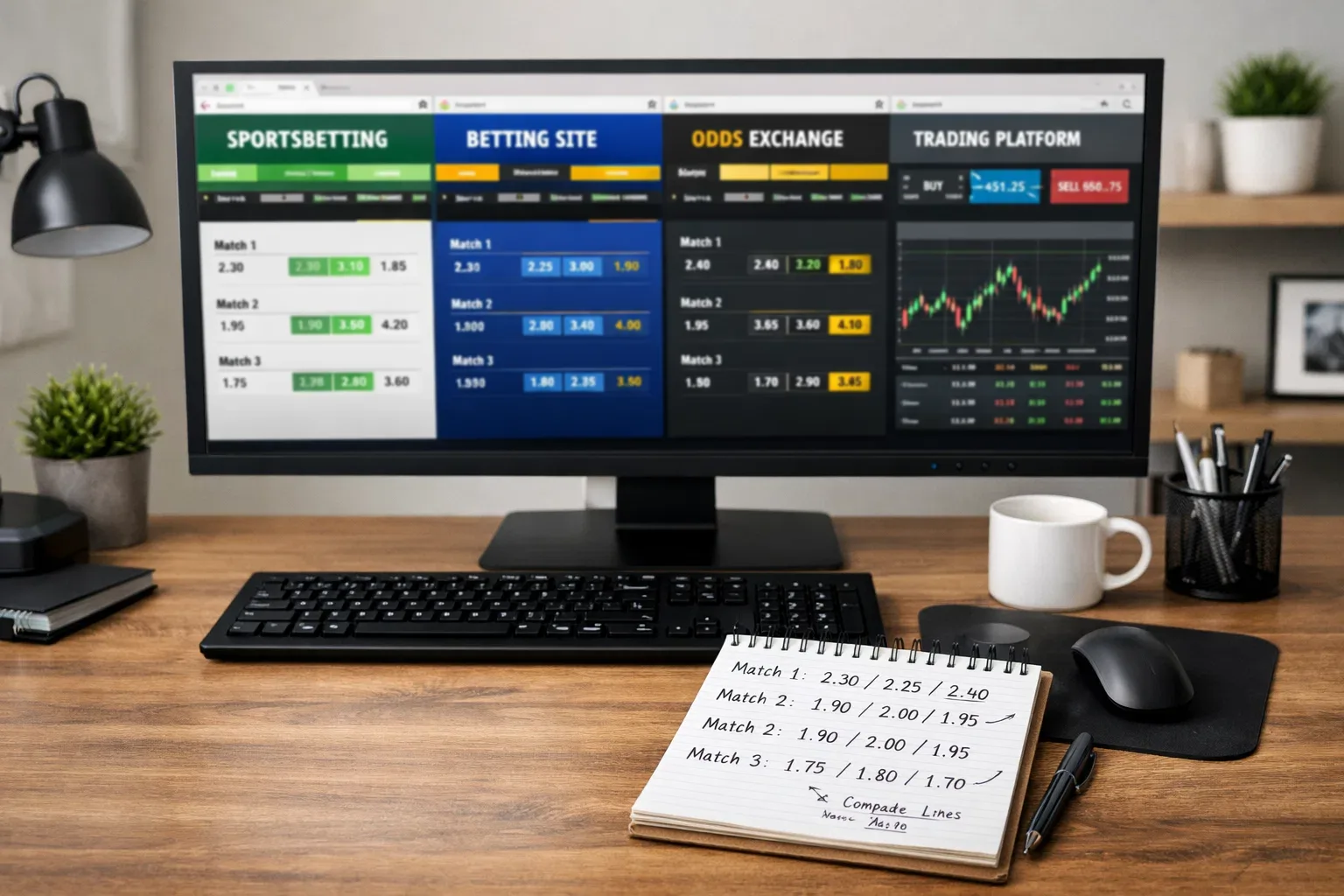
Maintain accounts at both exchanges and multiple bookmakers. This access enables odds comparison, strategic flexibility, and protection against single-platform dependency. Account diversification is basic betting infrastructure.
Use exchanges for consistent value betting where account longevity matters. Your edge compounds over time without restriction risk. The superior odds and welcoming treatment make exchanges the natural home for serious, profitable betting.
Use bookmakers strategically for promotions, enhanced odds, and markets where they offer better prices. Accept that bookmaker accounts may face restrictions; extract value while accounts remain open without depending on them for long-term strategy.
Compare odds across all platforms before significant bets. The few seconds required for comparison often produces meaningfully better prices. This discipline is especially important for larger stakes where small odds differences translate to substantial absolute amounts.
Championship Betting: Exchange vs Bookmaker Considerations
Championship markets present specific platform considerations worth addressing. Exchange liquidity on Championship matches is substantial but below Premier League levels. Main match markets typically have sufficient depth; derivative markets like correct score or goalscorer might have limited exchange activity.
Bookmaker pricing on Championship markets is often less efficient than Premier League equivalents. The reduced analytical scrutiny means bookmaker odds sometimes contain larger errors. These errors create opportunities regardless of platform, but capturing them requires the odds to be available at acceptable prices.
For systematic Championship betting approaches, exchanges offer advantages through account longevity. A profitable Championship under betting strategy that would trigger bookmaker restrictions can run indefinitely on exchanges. This sustainability makes exchanges the superior long-term platform for serious Championship specialists.
However, bookmaker promotions often extend to Championship matches, particularly during televised fixtures. Enhanced odds offers, price boosts, and free bets can create value that exceeds normal exchange advantages. Strategic bookmaker use captures these promotional opportunities while exchange accounts handle core betting activity.
Apply the specific draw betting strategy.
Who Should Prefer Each Platform
Exchange-first approaches suit bettors who prioritise long-term profitability over convenience, have patience for learning exchange mechanics, bet frequently enough to benefit from commission reductions, and want to develop trading or hedging strategies.
Bookmaker-first approaches suit recreational bettors who value simplicity and guaranteed liquidity, want access to promotions and enhanced odds, bet infrequently on popular markets, and don’t mind occasional account restrictions.
Most serious bettors should use both platforms strategically. The platforms are complementary rather than mutually exclusive. Optimising returns requires accessing the best available odds regardless of platform source.
Building a Multi-Platform Approach
Develop systematic processes for platform selection. Perhaps you default to exchange betting for standard selections but switch to bookmakers when promotional value exists. Document your criteria for platform choice to ensure consistency.
Track performance separately by platform to understand where your edge concentrates. You might discover that bookmaker odds in certain markets exceed exchange equivalents, or that exchange flexibility enables strategies impossible elsewhere. Let empirical evidence guide platform allocation.
Maintain sufficient funds across platforms to act quickly when opportunities arise. Having to transfer money between accounts delays bet placement, potentially costing opportunities. Keep working capital distributed appropriately across your active platforms.
Exchanges and bookmakers offer different experiences with different advantages. Understanding these differences enables informed platform selection for each betting situation. Neither platform dominates all scenarios; strategic use of both maximises overall betting returns and sustainability.
Rely on strictly proven angles at burnley bet.