

Systematic match analysis produces better betting decisions than casual assessment. A structured approach ensures you consider all relevant factors consistently, avoiding oversights that occur with ad-hoc evaluation. This guide provides a framework for weekly Championship fixture analysis, covering key research areas, typical betting angles, and a repeatable process for converting analysis into betting action.
The Weekly Analysis Cycle
Championship fixtures typically become known approximately two weeks in advance, with most matches scheduled for Saturday afternoon with occasional Friday evening, Sunday, and midweek fixtures. This scheduling creates natural analysis windows.
Begin analysis midweek before Saturday fixtures. This timing allows checking team news as it emerges while avoiding last-minute rushed decisions. Tuesday through Thursday represents optimal research period for weekend matches.
Monitor odds movements from market opening through to kickoff. Early odds reflect bookmaker assessment; late odds incorporate market information including sharp bettor positioning. Understanding how prices evolve informs both value assessment and timing decisions.
Reserve final decisions for when team news confirms or contradicts your assumptions. Key absences might invalidate analysis conclusions; surprising returns might create unexpected value. Build flexibility into your process rather than locking in decisions prematurely.
Team Form Assessment
Recent results provide starting context but require deeper examination. Look beyond wins and losses to underlying performance. A team winning through fortunate goals is vulnerable; one losing despite creating chances might improve. Performance analysis trumps result analysis.
Expected goals over recent matches reveal sustainable form better than actual goals. If a team’s xG exceeds goals scored across multiple matches, regression should improve results. Conversely, teams outperforming xG face potential decline.
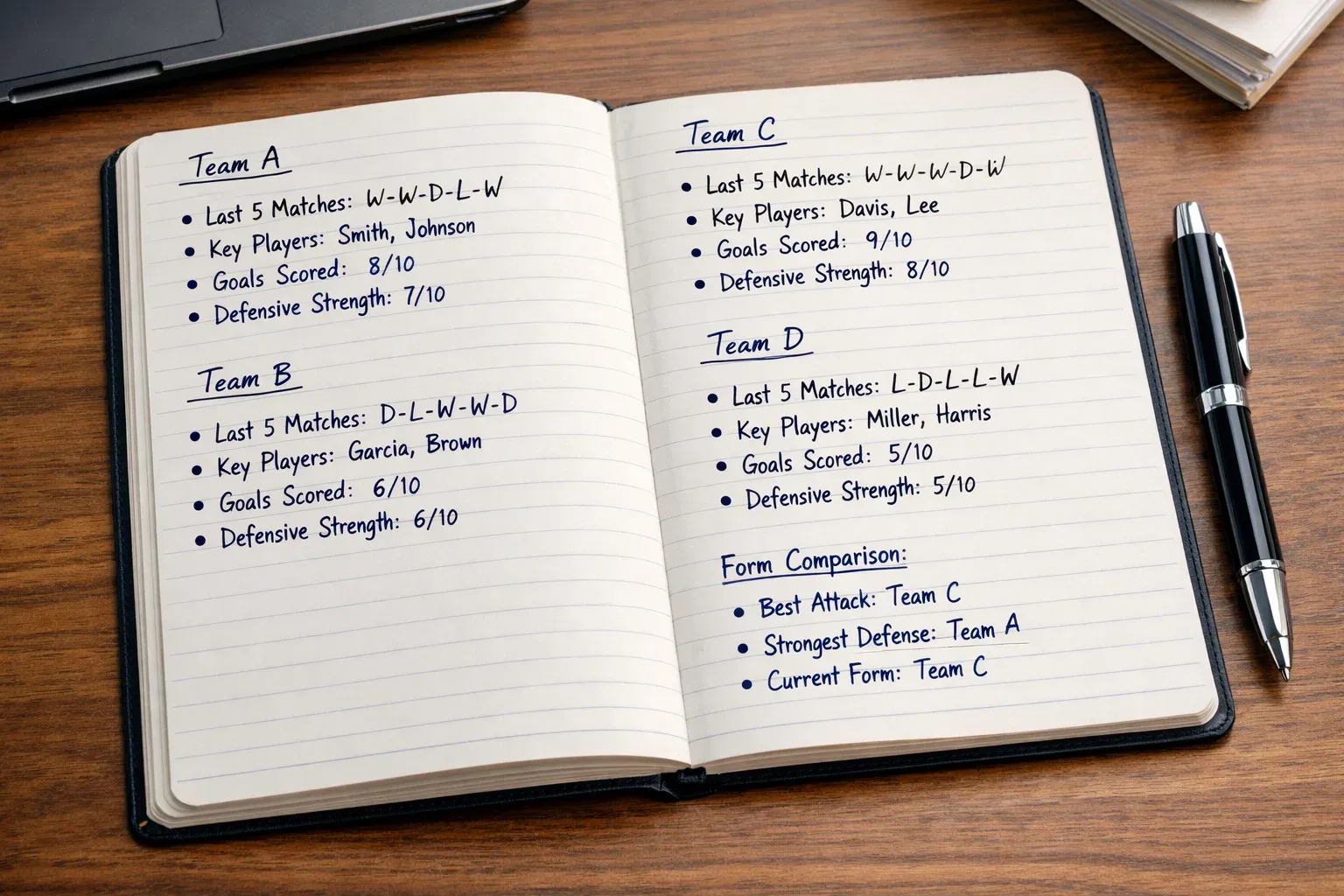
Home and away form often diverge substantially in Championship football. A team’s overall form might obscure home dominance or away struggles. Assess form in context relevant to the specific fixture rather than aggregate across all matches.
Form against similar opponents matters more than form against dissimilar ones. How does a team perform against fellow promotion challengers versus relegation battlers? Against defensive teams versus attacking ones? Contextualised form analysis produces sharper predictions.
Head-to-Head Research
Historical meetings between teams sometimes reveal patterns. Certain fixtures consistently produce high-scoring affairs or grinding encounters regardless of current team form. These patterns might reflect tactical matchups, psychological factors, or ground characteristics.
Weight recent head-to-head meetings more heavily than historical ones. Teams change significantly over years; meetings from five seasons ago involved different players, managers, and tactical approaches. Focus on recent meetings while noting longer-term patterns.
Consider venue when analysing head-to-head records. Home and away records often differ markedly for the same fixture. The relevant history is matches at the specific ground where this fixture will occur, not overall head-to-head.
Don’t overweight head-to-head in isolation. Some fixtures have limited relevant history; newly promoted teams have no recent head-to-head with established Championship sides. Use head-to-head as one input among many rather than primary driver.
Team News Impact Assessment
Injuries and suspensions significantly affect match probabilities. A key defensive absence might transform under expectations; a striker’s return might elevate goal-scoring likelihood. Monitor team news through official channels and reliable journalists.
Assess the quality of available replacements. Missing a star player matters less if capable deputies exist. Missing a key player in a thin squad area creates larger impact than absences where depth provides coverage.
Recent workload affects performance, particularly during fixture congestion periods. Teams coming off midweek matches face fatigue disadvantages against rested opponents. Consider not just who is available but their likely physical condition.
Manager selections sometimes reveal tactical intentions. Rotation patterns, surprising inclusions, or formation changes suggested by team selection provide clues about intended approach. These insights inform market selection beyond basic win probability.
Tactical and Stylistic Analysis
How teams play matters as much as how good they are. Defensive teams playing each other produce different dynamics than attacking teams meeting. Understanding stylistic matchups sharpens predictions for goals markets and scoreline expectations.
Formation and tactical approach influence expected match patterns. Two teams playing 5-3-2 will produce different football than two playing 4-3-3. Research how teams typically set up and how these approaches might interact.
In-game management patterns affect live betting opportunities. Some managers make early tactical adjustments; others wait until late. Some chase games aggressively; others protect results conservatively. These tendencies inform in-play strategy.
Set piece quality creates both goal-scoring and goal-preventing implications. Teams strong at set pieces might produce goals despite limited open-play quality. Teams weak defending set pieces are vulnerable despite otherwise solid defence.
Market Selection Process
Identify which markets align with your analysis conclusions. If your analysis suggests a low-scoring match, under goals markets become relevant. If analysis points toward home dominance, match result or handicap markets suit better. Match market to thesis.
Compare your probability assessment against implied odds probability. If you assess under 2.5 goals at 60% probability but odds imply 50% probability, value exists. Without this comparison, you’re betting on opinions rather than identified edge.
Consider multiple correlated markets rather than defaulting to match result. Your analysis might suggest home win is likely but not particularly mispriced, while under 2.5 offers clearer value. Be flexible about market selection.
Size positions proportionally to confidence and edge magnitude. Matches where analysis produces strong conviction and clear value warrant larger stakes than marginal situations. Not every match needs betting; selectivity improves results.
Building Your Analysis Template
Create a standardised checklist ensuring consistent coverage. Your template might include sections for team form, head-to-head, team news, tactical assessment, and market evaluation. Consistent structure prevents overlooking important factors.
Document your analysis for future reference. Written records of reasoning enable review after results are known. You can assess whether losses resulted from analytical errors or unpredictable variance, informing future improvement.
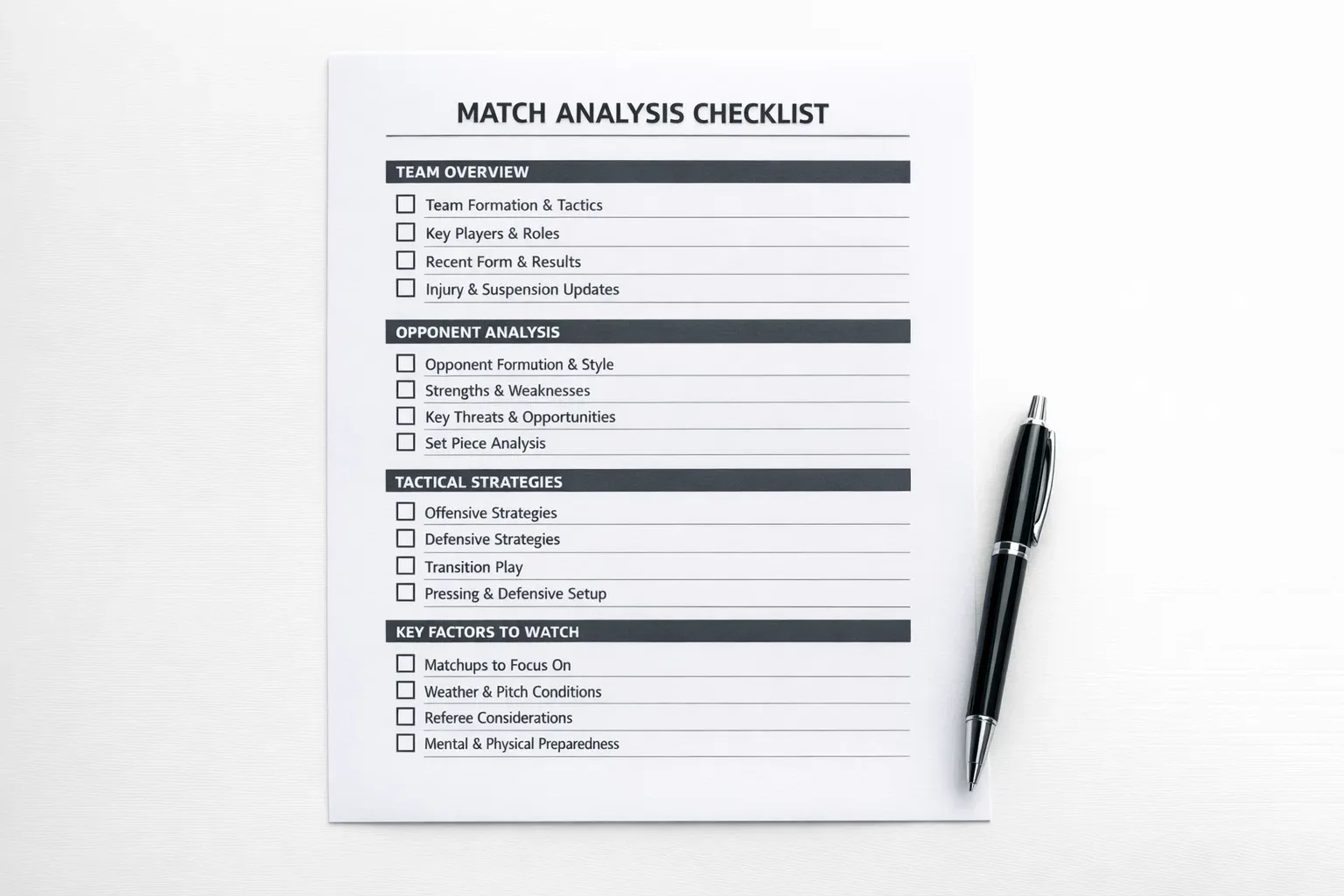
Include explicit value calculation rather than vague impressions. Estimate probabilities numerically; compare against odds numerically; calculate expected value explicitly. This discipline catches situations where perceived value doesn’t survive quantitative scrutiny.
Time-box your analysis to maintain efficiency. Unlimited research time produces diminishing returns. Set reasonable time limits per match, focusing on highest-impact information rather than exhaustive but marginally useful detail.
Weekly Workflow Example
Monday and Tuesday: Review upcoming fixtures, note obvious angles, and check early odds movements. Identify matches warranting deeper analysis versus those likely to skip.
Wednesday and Thursday: Conduct detailed analysis on selected matches. Research team form, check statistical resources, review head-to-head, and develop preliminary market assessments.
Friday: Monitor team news as it emerges. Adjust analysis based on confirmed line-ups or injury updates. Make preliminary betting decisions for Saturday matches.
Saturday morning: Final team news check. Execute planned bets at best available odds. Avoid last-minute decisions not grounded in prior analysis.
Quality Control Measures
Review completed analysis against results periodically. Did your reasoning prove sound even when bets lost? Did wins come from correct analysis or fortunate outcomes? This review improves analytical quality over time.
Track which analytical factors actually correlate with successful predictions. Perhaps your form analysis predicts well while tactical assessment adds little. Empirical review reveals where analytical effort produces returns.
Adjust your template based on accumulated experience. Add elements that prove useful; remove those that consume time without improving predictions. Your framework should evolve as you learn what works for your approach.
Share analysis with trusted peers for feedback. External perspectives catch blind spots and reasoning errors that self-review misses. Collaborative improvement accelerates learning compared to isolated analysis.
Integrating Analysis Into Betting Practice
Analysis without action produces no returns. Having completed thorough research, execute bets with confidence rather than second-guessing sound analysis. Trust your process while remaining open to learning from results.
Accept that good analysis sometimes produces losing bets. Variance ensures even correct probability assessments don’t win every time. Evaluate your analytical process separate from individual outcomes.
Build analysis habits that become automatic over time. Initially effortful research becomes efficient routine with practice. The structure that seems cumbersome early becomes natural framework that improves both analysis quality and betting results.
Systematic Championship match analysis transforms betting from gambling into informed decision-making. Those who implement structured research approaches position themselves for better outcomes than casual bettors who rely on impressions and intuition.